Fast, Reliable Storefront Door Repair in Buffalo, NY: Keep Your Business Secure and Open
Fast, Reliable Storefront Door Repair in Buffalo, NY: Keep Your Business Secure and Open
Storefront door repair in Buffalo, NY is about more than fixing a squeak or tightening a screw. It protects sales, staff safety, and building security through a winter that can dump several feet of snow in a single event. It keeps an entry smooth and ADA friendly on retail corridors that see thousands of door cycles in a day. It restores a clean close and a positive latch after wind gusts off Lake Erie shove a door off alignment. It also prevents an easy break-in on Main Street, Elmwood Avenue, or Walden Avenue after hours.
Buffalo storefronts operate in ASHRAE Climate Zone 5A, a cool-humid zone that punishes hardware and seals. Lake-effect snow pushes annual totals into the 95 to 100+ inch range. Temperatures drop below 20°F for long stretches. That 20°F mark matters. Below it, the hydraulic fluid inside a door closer thickens and loses consistent damping. A closer, which is the spring and oil-filled device that controls swing speed and latching, starts to leak as internal seals give up. Road salt, dragged in from parking lots across Cheektowaga and Amherst, accelerates corrosion in thresholds and bottom pivots. None of this is theoretical. It shows up every winter on doors that worked fine in October and fail by January.
Why Buffalo Storefronts Need Repair Service Built for Local Conditions
Buffalo’s wind, snow, and foot traffic create a specific failure pattern on aluminum storefront doors. An aluminum storefront door is a door with aluminum framing around a glass panel, set into an aluminum storefront system made up of vertical mullions and horizontal rails. This is the standard entry at retail, restaurant, bank, and office spaces across Erie County. These doors rotate on pivot hinges, which are hardware sets that carry the door weight on a pin at the floor and a matching pin at the head of the frame rather than on side hinges. They close using a hydraulic door closer, which is the device that returns the door to the frame and controls speed so it does not slam. They lock with narrow stile mortise hardware like an Adams Rite deadbolt or deadlatch, which is a lock designed to fit the narrow vertical section of an aluminum door. They seal to the opening with weatherstripping, gaskets, and a door sweep.
In Buffalo, four environmental forces drive most repairs. First, cold thickens hydraulic oil inside closers and causes seal failure. Second, wind gusts push doors off alignment and cause dragging at the threshold. Third, road salt and slush collect in floor pockets that house bottom pivot bearings and corrode them until the door sags. Fourth, freeze-thaw cycles tear EPDM bulb gaskets, which are the rubber weatherstrips that seal the door perimeter. The result is a door that slams, will not latch, scrapes the threshold, or sits open in a storm. On busy Elmwood Village and Hertel Avenue entries, the problem grows worse because these doors see 500 to 3,000 or more open-close cycles per day.
That cycle count is the shareable local fact that catches many out-of-town contractors off guard. Buffalo’s busiest storefronts operate at cycle rates similar to transit hubs. This is why Grade 1 hardware rated for high cycles, like LCN 4040 series closers, Von Duprin 98/99 exit devices, and Kawneer TH1118 pivot sets, make sense even for small-format retail. The equipment last longer and costs less over a winter than repeated low-grade swaps.
How a Proper Storefront Door Repair Restores Performance
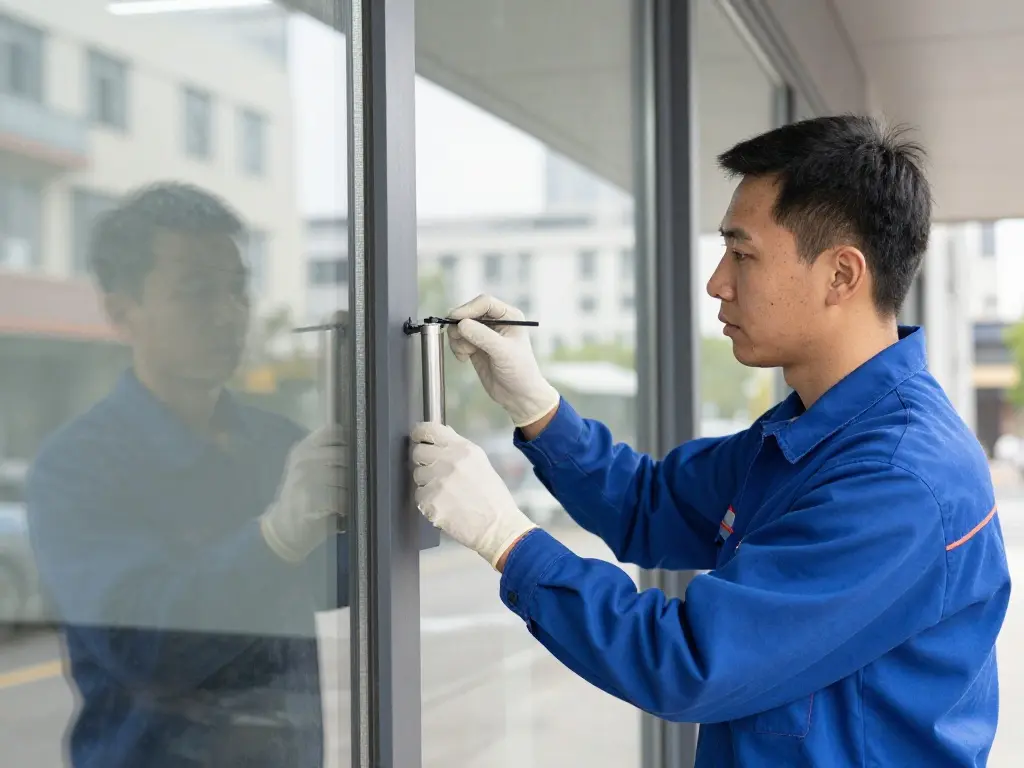
On a typical call in Downtown Buffalo 14202 or the Medical Corridor 14203, the technician starts with diagnosis. Diagnosis is not guesswork. It checks three planes of alignment and four core functions. The three planes are vertical plumb, horizontal level, and door-to-frame reveal, which is the even gap needed around the door to avoid rubbing. The four core functions are closer control, free swing, latch engagement, and weather seal. If the door is sagging, the bottom pivot may have a failed bearing. A pivot bearing is the small assembly that lets the door rotate on a fixed pin at the bottom. Salt and water collect in the floor pocket and rust that bearing until it binds. If the door slams, the closer may be low on oil or have bad sweep and latch adjustments. Sweep speed is the main closing speed. Latch speed is the final few inches. If the door latches only when yanked, the strike alignment may be off or the deadlatch plunger may be blocked. The deadlatch plunger is a small part on a narrow stile lock that prevents credit card shimming. If the door whistles in the wind, the EPDM bulb gasket or door sweep may be torn.
In Buffalo and Western New York, most storefront doors are narrow stile, which means the vertical stile of the door is about 2-1/8 inches wide. Medium stile doors run about 3-1/2 inches and wide stile doors are about 5 inches. Narrow stile doors use compact hardware like Adams Rite MS1850 deadbolts and 4510 deadlatches because the stile does not have room for a standard mortise lock. Identifying the stile width early helps the technician select the right replacement parts from the truck and finish the job in one trip.
Many Buffalo storefronts storefront door replacement Buffalo NY also use concealed overhead closers such as the Dorma RTS88 or a floor-mounted concealed closer like some Rixson models. A concealed overhead closer sits in a pocket in the header and uses a small arm to drive the door. A floor-mounted concealed closer sits under a cover plate in the floor and supports the door like a pivot while acting as the closer. These closers are neat and protected, but they need accurate alignment and sealing, or water intrusion can shorten their life. A leaking overhead closer drips oil at the top rail. A failed floor closer makes the bottom of the door feel loose or binds through the swing.
Buffalo Winter Failure Patterns Seen on Service Calls
The most common winter call across South Buffalo 14220, West Seneca 14224, Cheektowaga 14225, and Amherst 14228 is a closer that either slams or refuses to close fully. The cause often traces to hydraulic fluid viscosity in the cold. Once fluid thickens below about 20°F, the closer loses consistency through the stroke. Internal seals work harder and start to leak. The fix is not just an adjustment. It is a closer replacement in many cases, especially if oil stains show on the door or frame. Buffalo technicians carry LCN 4040 and 4110 series, Norton 1600 and 8000 series, and Sargent 281 and 351 series. These are proven in cold climates. The choice depends on door size, traffic, and mounting. Surface-mounted closers are easy to access and replace. Concealed overhead or floor-mounted units need more setup and alignment but keep hardware hidden.
The second most common call is a sagging door that drags on the threshold. This is a pivot problem. A bottom offset pivot carries most of the door weight. Offset means the pivot pin sits a small distance away from the door face so the door can swing clear of the frame. Kawneer TH1118 is a common pivot set for narrow stile doors. Tall doors often use an intermediate pivot, like the Kawneer 050331, placed partway up the frame to reduce door twist. In Buffalo, bottom pivot bearings live a hard life in the floor pocket where ice and salt sit all winter. A failed bearing lets the door drop and rub the threshold. The fix is a new bottom pivot and a cleanup of the floor pocket. If the door is very tall or heavy, adding or replacing an intermediate pivot stabilizes the leaf and reduces repeat service calls.
The third pattern is a lock that does not latch cleanly. An Adams Rite narrow stile deadlatch needs a precise strike alignment. Wind pressure on a storefront can push a door enough to pop a weak latch. If the deadlatch plunger is held in by an old guard plate or misaligned strike, the lock can be picked with a thin card. Proper repair replaces worn strikes, realigns the frame, and sets the latch so NFPA 101 egress rules are respected. NFPA 101 is the Life Safety Code that governs safe exit. Local code also requires no special knowledge or effort to exit. For panic hardware on assembly occupancies, a Von Duprin 98 or 99 Series exit device gives durable egress under heavy use. On 3,000-cycle doors, a Grade 1 exit device outlasts light-duty options by years.
The fourth pattern is glazing failure. Tempered glass, which is heat-treated safety glass that crumbles into small pieces when broken, shows up on most Buffalo storefront doors. Tempered glass must meet ASTM C1048 and ANSI Z97.1 safety glazing standards. When a panel shatters during a break-in at a Grant Street shop or a storm near the Waterfront, the entry must be boarded up and secured. For doors near KeyBank Center or Sahlen Field on event nights, fast board-up prevents a second incident. Laminated glass, which is two sheets with a plastic interlayer that holds together when broken, is preferred in some entries for added security. Insulated glass units, which are dual panes with an air or gas space for energy efficiency, appear on larger sidelites and transoms. Buffalo heat loss is real in winter, so a tight seal around the door remains as important as the glass type.
Aluminum Storefront Brands and Hardware Common in Buffalo
On commercial corridors across Amherst, Tonawanda 14150, and Williamsville 14221, aluminum storefront systems from Kawneer, Tubelite, YKK AP, Vistawall, and US Aluminum dominate. Many office parks along Transit Road and Wehrle Drive run Kawneer Trifab 400 and 450 series or YKK AP YES 45 and YES 60 framing. Older plazas in Cheektowaga and Hamburg 14075 often carry original Vistawall or US Aluminum systems that are now 30 to 50 years old. These frames still perform when doors and hardware receive regular service.
Kawneer 190 narrow stile doors and Tubelite T14000 series doors pair well with heavy-use closers like LCN 4040 or Norton 8000. Concealed overhead closers such as the Dorma RTS88 show up on higher finish entries. For panic hardware, a Von Duprin 98 or 99 Series with a dog-down function in business hours, and secure relock at close, is the standard. For narrow stile swinging pairs, a meeting stile astragal, which is the vertical seal where two doors meet, stops wind whistles and water entry. Weatherstripping sets use EPDM bulb gaskets because EPDM holds up better to UV and cold than many alternatives.
Door sweeps at the bottom and aluminum thresholds at the sill create the air break. The sweep is the flexible strip that closes the gap at the bottom edge of the door. The threshold is the metal piece on the floor under the door. In Buffalo, these parts see salt, shovel contact, and cart damage. Replacing a corroded saddle threshold before winter reduces drafts and stops ice from forming at the door line. It also protects the new bottom pivot bearing by removing standing water in the pocket.
What a Storefront Door Repair Visit Looks Like on the Ground
A service call at a Chippewa Street bar or a Larkinville office typically starts with a conversation about symptoms. Is the door slamming. Does it stick when warm and refuse to close when cold. Did glass shatter after a break-in. Then the technician checks pivot play at the bottom and top, closer control through the full swing, lock throw and latch, alignment of the frame, and seal condition. Measurements confirm stile width and handing. Handing is the way a door swings. It is called left-hand or right-hand viewed from the exterior. On aluminum doors with offset pivots, handing matters for pivot selection.
Hardware that often rides on the truck for single-visit repair includes Kawneer TH1118 offset pivot sets, Kawneer 050331 intermediate pivots, Tubelite and YKK AP pivot parts, Adams Rite MS1850 deadbolts, Adams Rite narrow stile deadlatches, LCN 4040 and 4110 closers, Norton 1600 and 8000 closers, Dorma RTS88 components, Von Duprin 98/99 exit devices, electric strikes for access control tie-ins, EPDM weatherstripping, door sweeps, and aluminum thresholds. For glass emergencies, technicians carry plywood and OSB for board-up, along with tempered glass blanks in common sizes to get a door back in service the same day when sizing allows. Custom sizes are ordered for next-day or rapid turn with local fabricators.
Maintenance That Pays for Itself in Buffalo
Fall pre-winter visits across Allentown 14222, North Park 14216, and the University District 14215 save time and cost. That visit checks closer fluid condition, sets sweep and latch speeds for cold weather, clears floor pivot pockets of debris, lubricates pivot bearings, replaces torn weatherstripping, and inspects thresholds and screws that work loose under traffic. It also checks ADA opening force. ADA sets 5 pounds as the maximum opening force for interior doors, with weatherproof exterior entries allowed higher under local code. Many storefront closers drift tight over time. A few turns on the spring and valve settings put the door back in range for accessibility and safety.
Quarterly service makes sense for doors with 1,500 to 3,000 daily cycles along Elmwood and Hertel. Semi-annual service works for moderate traffic properties in Clarence and Orchard Park 14127. Annual service suffices for lower-traffic offices. The math is straightforward. A proactive pivot kit replacement in Buffalo often runs 150 to 450 dollars in normal hours. An after-hours failure that jams a door open during a storm can double that cost with emergency premiums, board-up, and possible glass replacement if the swinging leaf catches wind and snaps a corner. The winter premium is real and avoidable.
Emergency Storefront Door Repair Realities in Western New York
Break-ins at street-level retail near Canalside or the Theatre District carry a pattern. Glass is smashed. The lock is cut or pried. The frame may be racked, which means it is twisted out of square. A proper response secures the opening first. Board-up materials go on fast and tight. If a lock cylinder was drilled, a new cylinder and a fresh Adams Rite MS1850 deadbolt restore lockup. If the frame is racked, shims and fasteners pull it back to square where possible. If the hardware pulled through the aluminum skin, a reinforcement plate on the door stile restores strength. Where energy codes require safety glazing, replacement glass meets ANSI Z97.1 and ASTM C1048. Many Buffalo doors benefit from a shift to laminated safety glass at the next replacement to discourage smash-and-grab repeats.
Vehicle impacts happen at corner entries and grocery plazas on Niagara Falls Boulevard and Transit Road. A car bump can bend a frame or crush a threshold. In these cases, technicians measure mullion plumb, sill level, and check anchor points. A frame repair may need new anchors into the slab and a reset threshold with fresh sealant beads to stop water entry. If the door leaf is twisted, a replacement leaf with the correct stile width can be hung on the existing frame to control cost.
Standards and Compliance That Shape Storefront Repairs
Buffalo repairs do not happen in a vacuum. They follow codes and standards that protect users and property. Glazing work uses ASTM and ANSI rules for safety glass. Exit hardware and life safety follow NFPA 101 and the New York State building code, including IBC Chapter 10 on means of egress. Automatic door service follows AAADM protocols under ANSI A156.10 for sliding doors and ANSI A156.19 for power-assisted swing doors. Many Buffalo medical and professional buildings on the Buffalo Niagara Medical Campus schedule AAADM inspections annually to keep logs current. For any power operator on a storefront, technicians confirm sensor coverage and 5 lbf ADA opening force as part of service. Even if a site does not run an automatic door, closer force and latch speed get checked so the door is safe for all users.
What It Costs to Repair a Storefront Door in Buffalo
Exact pricing depends on hardware choices, door size, and whether the call falls after hours. Still, some Buffalo ranges are consistent. Diagnostic visits and standard service calls often fall between 150 and 300 dollars in regular hours. A surface-mounted Grade 1 closer replacement with setup typically ranges 250 to 650 dollars depending on model. A bottom pivot kit with cleanout and adjustment often lands between 150 and 450 dollars. An emergency board-up in the city commonly runs 300 to 600 dollars based on size and access. Tempered glass replacement for a typical 1/4 inch storefront door panel varies with size and availability, often 450 to 900+ dollars for common configurations, with laminated or insulated units higher. Automatic door sensor or operator issues can vary widely and require AAADM technicians to diagnose.
Buffalo also sees brand-driven choices based on availability. LCN 4040 series and Norton 8000 series closers are common on stocked service trucks. Adams Rite MS1850 deadbolts fit most narrow stile doors and are an easy upgrade from worn locks. Von Duprin 98 or 99 exit devices cost more than light-duty options but last years longer on a Chippewa or Elmwood bar with constant use. A smart repair path respects the opening’s duty cycle, wind exposure, and winter service history.
Service Coverage Across Buffalo, Erie County, and Niagara County
Storefront door repair demand clusters in known zones. Downtown Buffalo 14202 handles heavy foot traffic and security demands. The Medical Corridor 14203 and the Jacobs School zone require ADA-friendly entries and consistent closing speeds. Elmwood Village 14222 and Allentown run long hours and high cycle counts in winter salt. The University District 14215 sees student-driven surges that stress closers and pivots. Cheektowaga 14225, West Seneca 14224, and Amherst 14228 have mid-century and later plazas where original Vistawall and US Aluminum frames remain solid while hardware needs cycles of refresh. Hamburg 14075 and Orchard Park 14127 carry wind exposure from open lots that pushes doors off latch. Tonawanda 14150 and North Tonawanda 14120 bring industrial traffic and heavy cart loads that beat up thresholds and sweeps. Williamsville 14221 and Clarence present higher finish entries where concealed overhead closers and low-profile thresholds are common.
Across this corridor, response time and truck inventory matter more than most realize. In winter, two trips often become four due to storms and supply delays if the contractor does not carry the right parts on the truck. Buffalo storefronts save time and cost when technicians arrive with Kawneer TH1118 pivot sets, LCN and Norton closers, Adams Rite locks, Von Duprin exit devices, EPDM gaskets, and board-up materials. Completing a repair in one visit restores revenue and reduces risk faster than a diagnose-then-return model.
Response Model and Stocked Inventory That Shorten Downtime
A direct-dispatch model with local technicians reduces delay across Buffalo and Western New York. Trucks leave from the 344 Sycamore Street base in the 14204 corridor and reach Downtown fast via the I-190 and Route 33 connectors. Typical after-hours response within the City of Buffalo averages within the hour. Cheektowaga, West Seneca, and Tonawanda often see roughly two-hour response after hours, subject to weather and traffic on I-90 and I-290. This matters because a storefront stuck open on a cold night in South Buffalo can freeze a closing mechanism solid in an hour.
- Common truck stock: Kawneer TH1118 pivots, Kawneer 050331 intermediate pivots, Tubelite and YKK AP pivot kits, LCN 4040 and 4110 closers, Norton 1600 and 8000 closers, Dorma RTS88 components, Sargent 281 and 351 closers, Adams Rite MS1850 deadbolts and 4510 deadlatches, Von Duprin 98/99 devices, EPDM bulb gaskets, door sweeps, aluminum thresholds.
- Board-up materials: 1/2 inch plywood and 7/16 inch OSB for quick security at broken doors and sidelites.
- Glass capability: On-hand tempered blanks in common door sizes for same-day use, laminated and insulated units ordered with short local lead times.
- Automatic door tools: AAADM checklists, sensor testers, and common parts for Stanley, Besam ASSA ABLOY, Horton, and Record USA systems when a storefront has a power operator.
This stocked-truck approach cuts most general glazier timelines in half. Many glass shops run a two-trip minimum on hardware jobs. Local commercial door specialists carry pivot, closer, and lock hardware on the truck to close the ticket the same day. That difference shows up in Google Map Pack reviews and repeat service requests from multi-site operators across Erie County.
Edge Cases That Require Extra Care
Ellison Bronze balanced doors appear at some high-end or historic entries. A balanced door is a specialized door that pivots on an axis closer to the center of the leaf so wind load is more balanced during operation. These systems need factory-aware handling. Adjusting them like a standard offset pivot door can cause misalignment and wind whistle. For heritage storefronts on Main Street or in Delaware District buildings, hardware choices often aim to preserve sightlines. That makes concealed closers and narrow-profile locks more likely. It also increases the need to seal frames at the perimeter to stop drafts without altering the look.
Another edge case is insulated glass units in doors. Many older leaves were not built for the weight of a 1 inch IGU, which is a dual-pane unit with an air space in between. If the rails and stiles are light, adding an IGU may overload the pivot set and closer. In those cases, a lighter tempered or laminated single pane with low-E film gives a better balance of efficiency and hardware life. A technician who has replaced hundreds of pivots on snow days will read that trade-off fast and help a property manager avoid expensive callbacks.
The Repair-First Mindset That Fits Buffalo Budgets
Material costs have risen in recent years. Glass, aluminum, and Grade 1 hardware prices increased enough that repair-first is often the smart call. An aluminum storefront frame can last decades. Doors and hardware are designed for replacement in place. A pivot, closer, or lock replacement keeps the frame and glass investment in service. Repair-first service also reduces downtime for busy restaurants in Kaisertown or retail on Niagara Falls Boulevard, where a full replacement would mean days of disruption.
That said, replacement is right when the door leaf is twisted, rails are broken, or the frame is out of square beyond what shimming can fix. A skilled storefront team can hang a new Kawneer, Tubelite, or YKK AP leaf into an existing frame, match finish, and return function fast. On pairs, attention to the meeting stile astragal and coordinator hardware, which is the device that ensures the correct closing order on double doors, keeps latching tight under wind load.
Practical Tips Facility Managers Use in Western New York
Facility teams at schools near the Buffalo State University campus and mixed-use buildings along Hertel Avenue use simple practices that avoid calls in the coldest weeks. They replace sweeps before first frost. They schedule closer checks in September. They ask for pivot pocket cleanouts during fall service. They log cycle counts at peak tenants to plan quarterly visits where needed. They flag any oil trace on a door arm or header as a pre-failure sign, not a cosmetic issue. These habits cost little and pay back in avoided emergency calls when roads are buried and response times stretch.
- Schedule a fall pre-winter storefront tune in September or October to adjust closer speeds for cold, replace torn weatherstripping, and clear pivot pockets of salt and debris.
- On very high traffic entries, plan quarterly checks so pivots and closers do not fail during the December to February deep freeze.
- Standardize on Grade 1 closers and pivots across sites along Transit Road, Walden Avenue, and Main Street Amherst to simplify parts and reduce downtime.
- Use laminated safety glass at repeat break-in locations to slow smash-and-grab attempts without changing the door look.
- For automatic doors at medical and grocery sites, keep AAADM inspection current under ANSI A156.10 and A156.19 so documentation is ready during audits.
Why Local Experience Matters for Storefront Door Repair in Buffalo, NY
Buffalo storefronts fail in Buffalo ways. Winter wind and cold change how a door moves. Salt changes how bearings age. High cycle counts on corridors like Elmwood Avenue and Chippewa Street change what hardware makes sense. A local team understands that a closer that seems fine at 2 pm in October will slam at 8 pm in January unless the valves, spring, and seals are set for cold weather and the arm geometry is right. A local team expects the bottom pivot to live in saltwater three months a year and stocks replacement bearings. A local team knows a door that swings out into the wind near the Waterfront needs beefier backcheck. Backcheck is the resistance a closer provides near full open to prevent a wind throw.
This kind of judgment saves time and cost. It also keeps businesses open on days when every customer matters. That is why direct-dispatch, Buffalo-based service with stocked trucks has become the preferred model for property managers and franchise operators across Erie County and Niagara County.
Why Buffalo Businesses Call A-24 Hour Door National Inc. For Storefront Door Repair
A-24 Hour Door National Inc. Operates from 344 Sycamore Street, Buffalo, NY 14204, with direct-dispatch local technicians and no call center delay. The company supports Buffalo, Cheektowaga, West Seneca, Hamburg, Orchard Park, East Aurora, Lackawanna, Kenmore, Tonawanda, North Tonawanda, Amherst, Williamsville, Clarence, Lancaster, Depew, and the broader Western New York corridor. AAADM-certified technicians handle automatic doors to ANSI A156.10 and A156.19 standards. Service trucks stay stocked with Kawneer TH1118 and 050331 pivots, LCN 4040 and Norton 8000 closers, Dorma RTS88 components, Adams Rite MS1850 deadbolts, Von Duprin 98/99 exit devices, EPDM weatherstripping, thresholds, and board-up materials so most storefront door repairs finish in one visit. The company is fully insured and bonded, factory familiar with Kawneer, Tubelite, YKK AP, Vistawall, US Aluminum, and Ellison Bronze systems, and responds 24/7 with within-the-hour city coverage on most after-hours emergencies and typical two-hour coverage to outer suburbs subject to weather.
Need fast, reliable storefront door repair in Buffalo, NY. Call +1-716-894-2000 for immediate dispatch or to schedule a diagnostic visit. For emergencies, crews roll from 344 Sycamore Street with board-up materials, pivots, closers, locks, and glass to secure and restore your entry. For scheduled work, visit https://a24hour.biz/services/storefront-doors/storefront-door-repair-buffalo-ny/ to request service across Buffalo and Western New York.
A-24 Hour Door National Inc provides commercial and residential door repair in Buffalo, NY. Our technicians service and replace a wide range of entry systems, including automatic business doors, hollow metal frames, storefront entrances, fire-rated steel and wood doors, and both sectional and rolling steel garage doors. We’re available 24/7, including holidays, to deliver emergency repairs and keep your property secure. Our service trucks arrive fully stocked with hardware, tools, and replacement parts to minimize downtime and restore safe, reliable access. Whether you need a new door installed or fast repair to get your business back up and running, our team is ready to help. A-24 Hour Door National Inc
344 Sycamore St Phone: (716) 894-2000 Website: https://a24hour.biz/buffalo
Instagram: @a24hourdoor
Buffalo,
NY
14204,
USA
Facebook: 24 Hour Door
Yelp: A-24 Hour Door National (Buffalo)
X (Twitter): @a24hrdoor