Storefront Door Maintenance in Buffalo
Storefront Door Maintenance in Buffalo
Buffalo storefront doors work harder than most. Long winters, wind off Lake Erie, salt on sidewalks, and high daily foot traffic push aluminum storefront systems to their limits. Routine maintenance is not a nice-to-have in Buffalo. It is the only way to keep doors closing safely, meeting code, and protecting heating dollars. It also keeps emergency calls down and extends hardware life on everything from pivot hinges and hydraulic door closers to locks, exit devices, and weatherseals.
Why Buffalo storefronts need maintenance that fits local conditions
Buffalo sits at the east end of Lake Erie in ASHRAE Climate Zone 5A. The city routinely sees 95 to 100+ inches of lake-effect snow from November through March. Winter temperatures drop below 20°F many nights, which is the threshold where hydraulic door closer fluid thickens and loses smooth control. High winds push on doors across Downtown Buffalo, the Waterfront, Canalside, the Theatre District, and corridors like Elmwood Avenue and Hertel Avenue. That wind increases the number of times a door cycles and the load the hardware must absorb every cycle.
Road salt gets tracked inside along Chippewa Street, Main Street, Grant Street, and Seneca-Babcock. Salt collects in the bottom pivot pocket, which is the small recessed area in the floor that holds the bottom pin on a pivot hinge. This pocket is out of sight and stays wet for long periods, which accelerates bearing failure and corrosion. Thresholds corrode, EPDM bulb gaskets tear, and door sweeps grind down against ice ridges. The result is a door that drags, slams, or will not latch on cold days. Planned storefront door maintenance tailored to Buffalo prevents these patterns from turning into downtime.
What a storefront door maintenance visit covers on a Buffalo commercial entry
A good maintenance visit focuses on the parts that carry load, seal weather, and secure the opening. The goal is to adjust, lubricate, replace consumable items, and flag parts that are near the end of life before they fail during business hours. Aluminum storefront doors use replaceable components, so maintenance keeps the frame in service for decades. On a typical Buffalo retail, restaurant, or office door, the visit will cover the door, frame, glass, hardware, and weather system as a whole.
Hydraulic door closer service
A hydraulic door closer is the device that controls closing speed and latching force using pressurized fluid and internal valves. Closer service in Buffalo includes checking for oil weeping at the shaft, confirming sweep speed and latch speed, setting backcheck so wind gusts do not throw the door open, and verifying ADA force. ADA door force for interior doors is typically 5 pounds. Exterior doors must balance weather seals with reasonable opening force. Technicians measure force and adjust the spring or replace the closer if seals have failed.
Below 20°F, closer fluid thickens. Thick fluid stresses the internal seals. Repeated cold cycles cause oil leaks and inconsistent closing. This is why a fall pre-winter visit in September or October is the single highest-return maintenance window in Buffalo. Adjustments done in the fall prevent winter slamming, failed latches, and after-hours calls when the door will not close. Common Buffalo-grade closers include LCN 4040 and 4110 series surface-mounted units, Norton 1600 and 8000 series, Sargent 281 and 351 series, and Dorma RTS88 for concealed overhead applications. Each has different spring power options and arm types, so brand familiarity matters when deciding to adjust, rebuild, or replace.
Pivot hinge and alignment service
An offset pivot hinge is the hardware set that carries the door weight on a vertical pin at the bottom and keeps the top of the door aligned with a matching top pivot. Unlike side-mounted butt hinges, offset pivots concentrate load at the bottom pin, which keeps the door swinging smoothly within the aluminum frame. Buffalo maintenance includes cleaning the floor pocket, lubricating the bearing, checking the top pivot adjustment, and inspecting intermediate pivots on tall doors. An intermediate pivot is an extra bearing mounted partway up the door stile to reduce flex on doors above roughly 7 feet 6 inches.
Kawneer TH1118 bottom and top pivot sets and Kawneer 050331 intermediate pivots are common in Buffalo storefront systems, along with Tubelite and YKK AP equivalents. When the bottom bearing seizes from salt and moisture, the door sags and drags on the threshold, cracks glass at the corner, or jams. Proactive pivot replacement during maintenance is far cheaper than a nighttime emergency when the door goes out of alignment and will not close.
Weatherstripping, sweeps, and thresholds
Weatherstripping is the compressible gasket around the door that keeps wind and water out. EPDM bulb gasket is a common storefront seal. It compresses to seal air gaps around the door perimeter. A door sweep is the flexible strip at the bottom of the door that seals to the threshold, which is the metal piece on the floor that bridges interior and exterior. Buffalo winds push cold air through any gaps. A maintenance visit checks compression, replaces torn gaskets, replaces worn sweeps, and cleans corrosion on thresholds. A small gap at the meeting stile astragal, which is the vertical strip where double doors meet, can drive large heating losses on windy days off Lake Erie.
Locking hardware and exit devices
Most aluminum storefront doors in Buffalo use an Adams Rite narrow stile lock. The Adams Rite MS1850 deadbolt uses a hook-shaped bolt that engages the frame and resists pry attacks. A narrow stile deadlatch allows free egress on the inside while securing on the outside. Restaurants and retail often use Von Duprin 98 or 99 series panic exit devices on secondary doors. A panic exit device is the horizontal bar that allows full-width push to open during an emergency. Maintenance checks include cylinder function, deadlatch strike alignment, dogging on exit devices for business hours, and egress compliance under NFPA 101 and the International Building Code Chapter 10. Misaligned strikes are a top cause of doors that will not latch in cold weather.
Glass and glazing system
Maintenance also scans the glass and frame. Tempered glass, which is heat-treated safety glass that breaks into small particles, follows ASTM C1048. Laminated safety glass, which uses two glass layers bonded by an interlayer to hold shards, follows ASTM C1172. Insulated glass units, known as IGUs, are double panes with a sealed air space, tested under ASTM E2190. Safety glazing must meet ANSI Z97.1. Buffalo maintenance looks for cracked edges, failed IGU seals with fogging, dry glazing tape, and frame racking. Early detection lets glass be ordered before a winter storm exposes the opening.
Automatic swing and sliding doors
Many medical offices in the 14203 Medical Corridor and retail anchors on Transit Road and Walden Avenue use automatic sliding or swing doors. Maintenance on automatic operators includes annual AAADM inspection. AAADM is the American Association of Automatic Door Manufacturers, which certifies technicians and sets inspection procedures. Sensor alignment and approach sensor function must meet ANSI A156.10 for sliding doors and ANSI A156.19 for low-energy swing doors. Buffalo’s cold changes sensor performance and door timing. Maintenance confirms open and close times, safety zones, and the 5 lbf ADA force limit on interior low-energy applications.
Buffalo failure patterns by season and how maintenance prevents them
Winter drives the most failures in Buffalo. Thickened hydraulic fluid makes doors close slowly until the closer warms, then they slam when traffic increases. Ice freezes in the bottom pivot pocket in South Buffalo and the Old First Ward, so the first few cycles grind the bearing. Wind gusts downtown against tall glass entries need stronger backcheck, which is the hydraulic resistance that slows a door near full open. Maintenance before the first freeze sets a winter profile on closers and refills closer oil if seals show early failure signs.
In spring, salt and moisture have done their damage. Thresholds in Cheektowaga 14225 and Amherst 14228 show pitting. Sweeps are frayed. Intermediate pivots on taller doors in office parks along Wehrle Drive and Essjay Road start to squeak. Spring maintenance replaces wear parts and resets hardware for milder conditions.
Summer humidity and tourist traffic at Canalside and KeyBank Center events drive daily cycles into the thousands on busy days. High cycle counts wear top pivot adjustment screws and exit device latches. Fall winds lift the sails again on the West Side and Elmwood Village, and the cycle repeats. On each change of season, small adjustments and low-cost parts keep doors smooth and secure.
How maintenance differs across Buffalo building archetypes
Historic main street storefronts along Elmwood Avenue, Hertel emergency storefront door repair Buffalo Avenue, Allen Street, and Grant Street often have 1960s through 1990s aluminum retrofits set in older brick openings. Frames may not be plumb. That puts extra load on pivot bearings and closers. Maintenance must include frame plumb checks and shim adjustments to keep latching consistent when temperatures swing.
Mid-century strip plazas across West Seneca 14224, Hamburg 14075, and Orchard Park 14127 run legacy Kawneer, Vistawall, and US Aluminum systems. Many of those doors now exceed 30 years in service. Pivots and closers are at end-of-life. Preventive replacement cycles during routine maintenance are the right call to avoid after-hours failures.
Suburban office parks in Amherst 14221 and 14228 use Kawneer Trifab 450 or 500 series frames and wider 5 inch stile doors with heavier closers like the LCN 4040. Those doors respond well to semi-annual service. Medical offices around the Buffalo Niagara Medical Campus have automatic doors from Stanley, Besam ASSA ABLOY, Horton, or Record USA. These require AAADM annual inspection and more frequent sensor cleaning because of high foot traffic and stricter risk controls.
Restaurants and quick-service chains around Niagara Falls Boulevard and Transit Road experience grease, moisture, and extreme cycling. Continuous attention to sweeps and thresholds pays back quickly in energy savings. Many run double-door vestibules where meeting stile astragals need fine tuning to reduce wind infiltration.
The maintenance checklist that fits Buffalo conditions
Maintenance programs work best when the tasks match local risk. On Buffalo storefronts, the list focuses on moving parts, seals, and safety. The following items anchor a productive service visit without wasting time on tasks that do not change outcomes.
- Hydraulic door closer inspection and seasonal adjustment, including sweep, latch, and backcheck, with ADA force verification.
- Offset pivot hinge cleaning, bottom pivot pocket de-icing and lubrication, top pivot alignment, and intermediate pivot bearing check on tall doors.
- Weatherstripping and door sweep replacement, meeting stile astragal alignment, and threshold corrosion cleaning or replacement planning.
- Adams Rite MS1850 deadbolt and deadlatch function test, strike alignment, and exit device dogging and latch engagement under NFPA 101 and IBC Chapter 10.
- Glass and frame scan for edge cracks, failed insulated units, loose glazing tape, and frame racking that can stress pivots and closers.
Brand and system familiarity helps maintenance decisions
Aluminum storefront systems across Buffalo include Kawneer Trifab 350, 400, 450, and 500 series, Tubelite T14000 and T24000, YKK AP YES 45 XT and YES 60 XT, and legacy Vistawall and US Aluminum frames. Doors can be narrow stile at 2 and 1/8 inches, medium stile at 3 and 1/2 inches, or wide stile at 5 inches. Stile size affects which closer spring and arm will control the door without slamming in wind. It also affects which Adams Rite lock body fits the stile. A maintenance technician who recognizes the frame and door series can select the right pivot set or closer on the spot. That keeps visits short and reduces repeat trips during peak season.
For closers, LCN 4040 and Norton 8000 series are workhorses on busy Buffalo storefronts. Dorma RTS88 concealed overhead closers fit projects that require clean sightlines, such as galleries near the AKG Art Museum and offices in the Delaware District. Sargent 281 and 351 series appear in many office entries where consistent closing must span wide temperature swings. Knowing how each closer behaves in Buffalo cold storefront door repair Buffalo, NY and wind determines whether to adjust, rebuild, or replace at maintenance time.
Service intervals that fit Buffalo traffic and weather
Door cycle counts on Buffalo storefronts range from a few hundred a day in lower-traffic offices to 3,000 or more on retail blocks during events or holidays. That range, plus weather exposure, drives service interval planning. Fall pre-winter service is mandatory for exterior doors citywide. Beyond that, the best fit is simple.
- Quarterly: high-traffic retail and restaurants on Elmwood Avenue, Hertel Avenue, Transit Road, and Walden Avenue, and medical facilities in the 14203 Medical Corridor.
- Semi-annual: suburban strip plazas in Cheektowaga 14225, West Seneca 14224, Amherst 14228, Hamburg 14075, and Tonawanda 14150.
- Annual: lower-traffic office park entries and back-of-house service doors with sheltered exposures.
- Event-based: a follow-up after a major lake-effect event that deposits 24 to 72 inches in 48 hours, or after a wind event with 40 to 60 mph gusts.
Energy, safety, and code benefits tied to maintenance
Weatherstripping, sweeps, and thresholds protect conditioned air. A quarter-inch gap at the bottom of a double door can cost hundreds of dollars in lost heat over a Buffalo winter. Maintenance that restores compression and sweep contact reduces drafts on lobby floors in Downtown 14202 and 14203 offices near the Buffalo Niagara Medical Campus. It also reduces customer complaints in Elmwood Village shops and restaurants on Allen Street and Chippewa Street.
Safety and code compliance are part of maintenance. Doors must latch reliably to maintain security, yet open freely for egress under NFPA 101 and IBC Chapter 10. Panic exit devices must reset and latch every cycle. Automatic door operators must meet ANSI A156.10 or A156.19 and pass AAADM annual inspection. Documenting these checks during maintenance satisfies insurance audits and reduces risk at properties across Williamsville 14221, Orchard Park 14127, and Lackawanna 14218.
Repair-first maintenance decisions save Buffalo owners money
Aluminum storefront doors are modular. They are built from replaceable components within a frame that can last decades. Maintenance that replaces pivots and closers on schedule is cheaper than letting parts fail. For example, proactive offset pivot hinge replacement runs roughly $150 to $450 per set in Buffalo depending on brand and door size. Let that bottom bearing fail on a Saturday night in January, and after-hours rates add 50 to 100 percent. If the door cannot close and needs a temporary board-up, add material and return trip costs. In worst cases, a sagging door corner can chip or crack a tempered glass panel, which turns a small repair into a large one.
Another Buffalo-specific maintenance advantage is adjusting hydraulic closers before winter. When fluid thickens below 20°F, a mis-set closer either slams or will not latch. Either condition risks property damage or a door stuck open at closing time. Fall service avoids that. It is a shareable fact among Buffalo facility managers that this one visit prevents the majority of winter door complaints.
Common storefront door systems found across Buffalo and how maintenance adapts
Along Main Street and in Amherst business districts, Kawneer Trifab frames pair with 190 series narrow stile doors. Maintenance on these often includes Adams Rite MS1850 deadbolt alignment in tight brick openings and LCN 4040 closer adjustments for gusting wind. In Tonawanda and North Tonawanda, older Vistawall frames still perform well after pivot and closer refresh. In Clarence and Williamsville, YKK AP YES 45 XT and YES 60 XT thermal-break frames show up in newer construction. Thermal-break frames reduce heat loss but need careful sweep and threshold selection to seal the bottom gap without driving opening force above ADA targets.
For automatic entries around Sahlen Field events and hospital facilities, Stanley, Besam ASSA ABLOY, Horton Automatics, and Record USA systems depend on sensor cleanliness and proper time settings. Maintenance that wipes lenses, recalibrates detection patterns with BEA or Optex sensors, and verifies door speeds avoids nuisance stops and slow operation that crowds doorways during busy periods.
What maintenance costs in Buffalo and how scope is sized
Maintenance pricing in Buffalo reflects local travel, weather risk, and brand availability. A scheduled maintenance visit that covers a pair of doors commonly includes a diagnostic fee with bundled labor. Replacement parts vary by brand and duty rating. Typical ranges for planned maintenance items on Buffalo storefront doors include the following, recognizing that site conditions and brand selection affect the final number:
Service call and diagnostic: $150 to $300. Hydraulic door closer replacement with Grade 1 hardware from LCN, Norton, Dorma, or Sargent: $275 to $650 per unit installed on a planned visit. Offset pivot hinge set with labor: $150 to $450. Weatherstripping and sweep set: $70 to $180 per leaf. Threshold replacement planning and labor vary by length and anchor condition. Exit device tune and dogging repair: often within labor unless replacement is required. Insulated glass unit reseal or replacement follows glass size and glazing method per ASTM and ANSI safety standards.
Properties with multiple doors across Cheektowaga, West Seneca, and Amherst can bundle semi-annual visits at a lower per-door rate. That model works well for multi-tenant retail and restaurant operators across 14225, 14224, 14228, and 14221. It also reduces surprises because the same technician sees doors in different seasons and can stage parts on trucks for first-visit fixes.
Response readiness matters even for maintenance
Maintenance is scheduled work, yet the same crews must be ready when a door fails. Buffalo facilities benefit when the same team that performs maintenance also carries stocked service truck inventory for storefront door repair Buffalo, NY. Common parts carried for first-visit completion include Kawneer TH1118 pivot sets, Kawneer 050331 intermediate pivots, Tubelite and YKK AP equivalents, Adams Rite MS1850 deadbolts and narrow stile deadlatches, LCN 4040 and Norton 1600 or 8000 series closers, Dorma RTS88 concealed closer kits, Von Duprin 98 or 99 exit devices, EPDM bulb gaskets, aluminum thresholds, and door sweeps. Many trucks also carry plywood and OSB for emergency board-up and a selection of tempered glass blanks in common sizes for same-day stabilization.
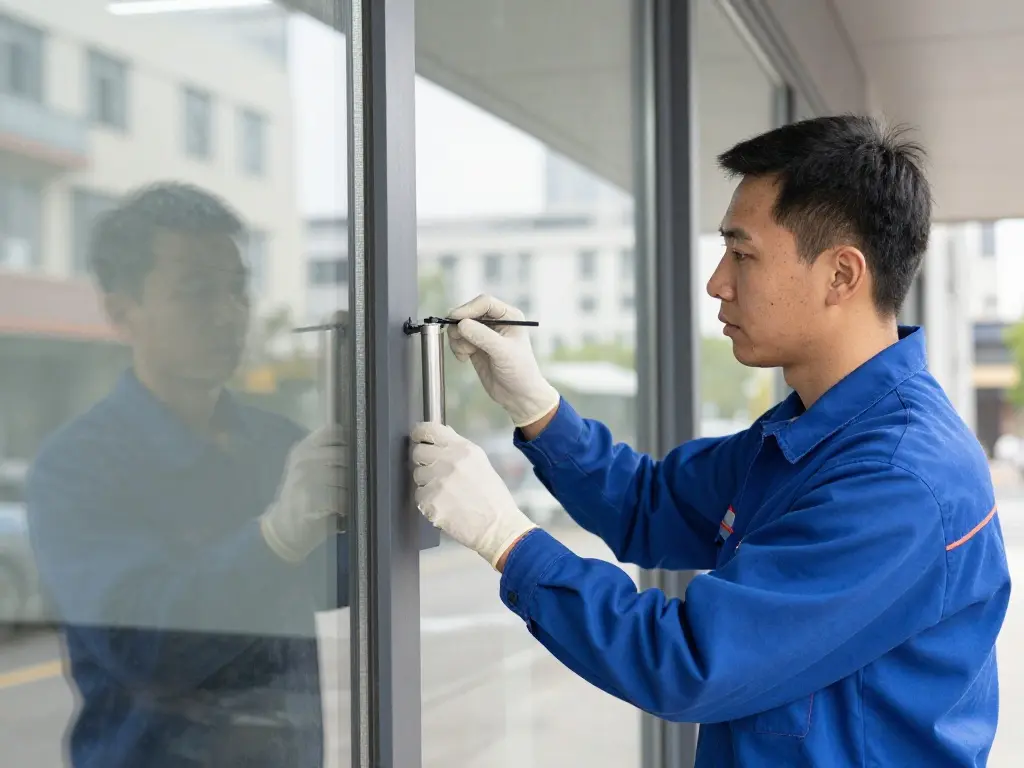
This first-visit completion model stands out in Buffalo. Many general glaziers must diagnose and return. A maintenance-oriented storefront team that arrives with parts on the truck closes repairs in one trip more often, even while performing preventive service. That reduces operational disruption for properties around Larkinville, the Hydraulics district, and Broadway-Fillmore 14206 and 14204.
Local routing, neighborhoods, and zip codes covered for planned service
Scheduled maintenance runs across the city and suburbs. Coverage includes Downtown 14202, the Medical Corridor 14203, West Side and Upper West Side 14213, North Park 14216, University District 14215, South Buffalo 14220, Allentown and Elmwood Village 14201 and 14222, and the Sycamore Street corridor 14204. Suburban routes reach Cheektowaga 14225, West Seneca 14224, Amherst 14228 and 14226, Williamsville 14221, Tonawanda 14150, North Tonawanda 14120, Lackawanna 14218, Hamburg 14075, Orchard Park 14127, Clarence 14031, Depew 14043, Lancaster 14086, and East Aurora 14052. Maintenance planning accounts for winter access and post-storm travel to keep visits on schedule even during heavy lake-effect events.
Why fall pre-winter service is Buffalo’s highest-return storefront visit
A single claim captures the Buffalo difference. Below 20°F, hydraulic closer fluid thickens and loses damping consistency. Buffalo spends much of winter below that threshold, especially in overnight and early morning hours. A fall service visit sets sweep and latch speeds for cold operation, checks for early seal failure, and replaces weak closers before the first real cold snap. It also replaces sweeps, tightens meeting stile seals, and clears salt from pivot pockets. Facility managers across Elmwood Village, Hertel Avenue, and Downtown have seen the pattern. Doors that get a fall tune carry through winter without slamming, without sticking open, and without after-hours emergency calls. The return is direct and measurable in reduced labor calls, less heat loss, and fewer security incidents at closing time.
Why Buffalo businesses call A-24 Hour Door National Inc. For storefront door maintenance
A-24 Hour Door National Inc. Maintains and repairs aluminum storefront doors, closers, pivots, locks, exit devices, and commercial glass across Buffalo and Western New York. The company operates from 344 Sycamore Street, Buffalo, NY 14204, within the Broadway-Fillmore and Downtown service zone. Technicians are AAADM-certified for automatic door work and follow ANSI A156.10 and A156.19 standards on sliding and swing operators. Stocked service trucks carry Kawneer, Tubelite, YKK AP, and Vistawall compatible pivot sets, LCN 4040 and Norton 8000 series closers, Dorma RTS88 concealed closer kits, Adams Rite MS1850 deadbolts and narrow stile deadlatches, Von Duprin 98/99 exit devices, EPDM weatherstripping, door sweeps, and aluminum thresholds to complete most maintenance discoveries in a single visit.
Buffalo coverage is 24/7 for emergencies with within-the-hour city response on after-hours calls and typical two-hour response for outer suburbs like Cheektowaga 14225, Amherst 14228, Tonawanda 14150, West Seneca 14224, Hamburg 14075, and Orchard Park 14127. For planned storefront door maintenance, the team schedules fall pre-winter service, semi-annual routes for high-traffic properties, and quarterly programs for retail and medical facilities. The company is fully insured and a licensed New York State commercial contractor. Factory familiarity includes Kawneer Trifab systems, Tubelite T14000 and T24000, YKK AP YES 45 and YES 60, legacy Vistawall and US Aluminum frames, and heavy-duty Ellison Bronze balanced doors found on institutional entries.
Facility and property managers who want maintenance that lowers winter failures and cuts energy loss across Buffalo, Cheektowaga, West Seneca, Hamburg, Orchard Park, East Aurora, Lackawanna, Kenmore, Tonawanda, North Tonawanda, Amherst, Williamsville, Clarence, Lancaster, and Depew can book a route visit or request a site review. Call +1-716-894-2000 to schedule storefront door maintenance or to dispatch a technician for storefront door repair Buffalo, NY. Online service details are available at https://a24hour.biz/services/storefront-doors/storefront-door-repair-buffalo-ny/. 24 hours a day, 7 days a week, 365 days a year.
A-24 Hour Door National Inc provides commercial and residential door repair in Buffalo, NY. Our technicians service and replace a wide range of entry systems, including automatic business doors, hollow metal frames, storefront entrances, fire-rated steel and wood doors, and both sectional and rolling steel garage doors. We’re available 24/7, including holidays, to deliver emergency repairs and keep your property secure. Our service trucks arrive fully stocked with hardware, tools, and replacement parts to minimize downtime and restore safe, reliable access. Whether you need a new door installed or fast repair to get your business back up and running, our team is ready to help. A-24 Hour Door National Inc
344 Sycamore St Phone: (716) 894-2000 Website: https://a24hour.biz/buffalo
Instagram: @a24hourdoor
Buffalo,
NY
14204,
USA
Facebook: 24 Hour Door
Yelp: A-24 Hour Door National (Buffalo)
X (Twitter): @a24hrdoor